
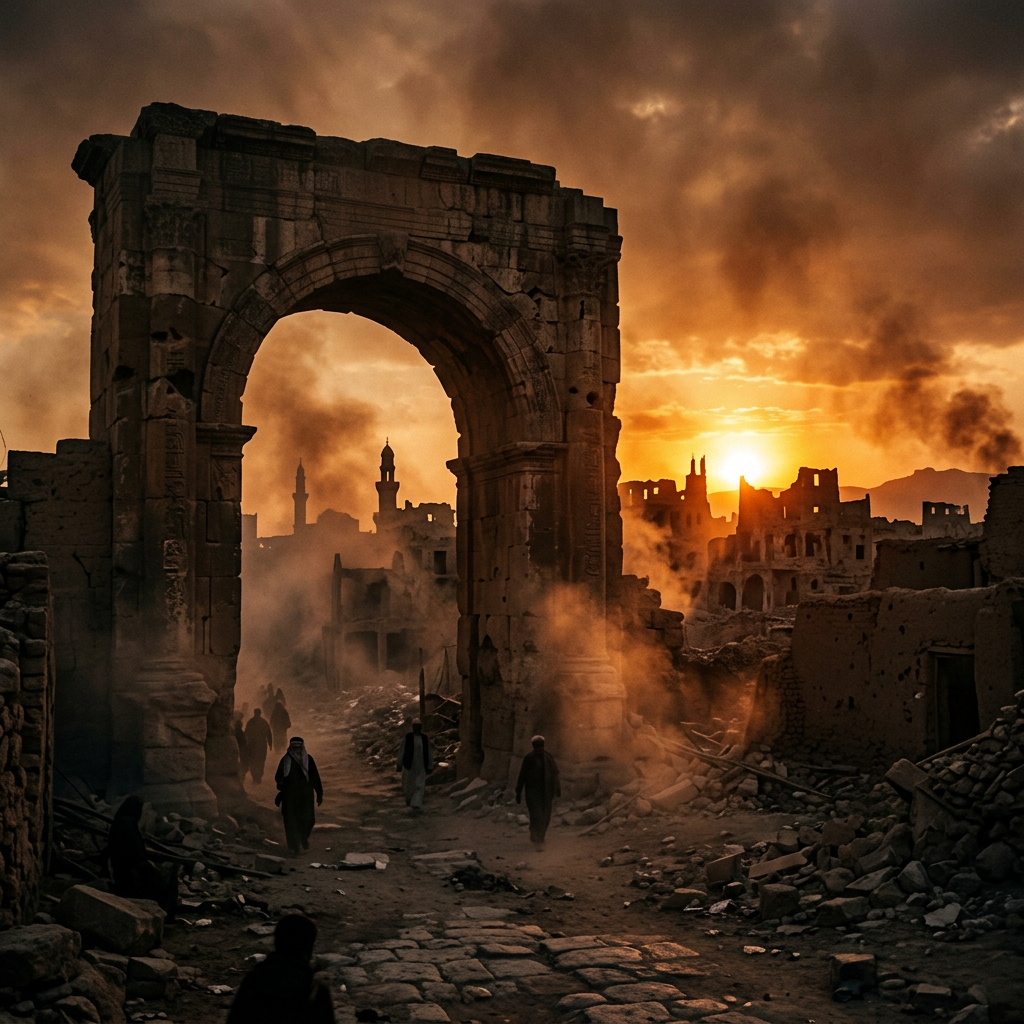
Shadows in the Cradle of Civilization: Mourning the Loss of History
Watching the news of Mosul falling was like watching a nightmare unfold in the very places where human history began. The rise of the black flags across Iraq and Syria felt like a sudden, violent eclipse of reason. I remember seeing photos of ancient artifacts being smashed and libraries being burned, and it felt like a personal assault on our collective memory. It wasn't just a political or military conflict; it felt like an attempt to erase the soul of a region. I spent many nights that summer wondering how we had reached a point where such nihilism could flourish so openly.
The human cost was, of course, the most devastating part. I read stories of families fleeing with nothing but the clothes on their backs, traversing deserts to escape a darkness they couldn't fully comprehend. The images of the Yazidis stranded on Mount Sinjar stayed with me for a long time—thousands of people caught between a precipice and a sword. It made me reflect on the fragility of civilization and how quickly the structures we build to protect us can be dismantled by those who value nothing but power and fear.
By the end of 2014, the world felt much more dangerous than it had at the start. The rise of this extremist state forced me to confront the reality of evil in a way that felt visceral and immediate. But it also sparked a deep appreciation for the cultural heritage that defines us. I found myself reading more about the history of the Levant, as if by learning about it, I could help preserve what was being destroyed. It was a year that taught me that our past is not a given; it is something we must actively defend and cherish, lest it be lost to the shadows.