
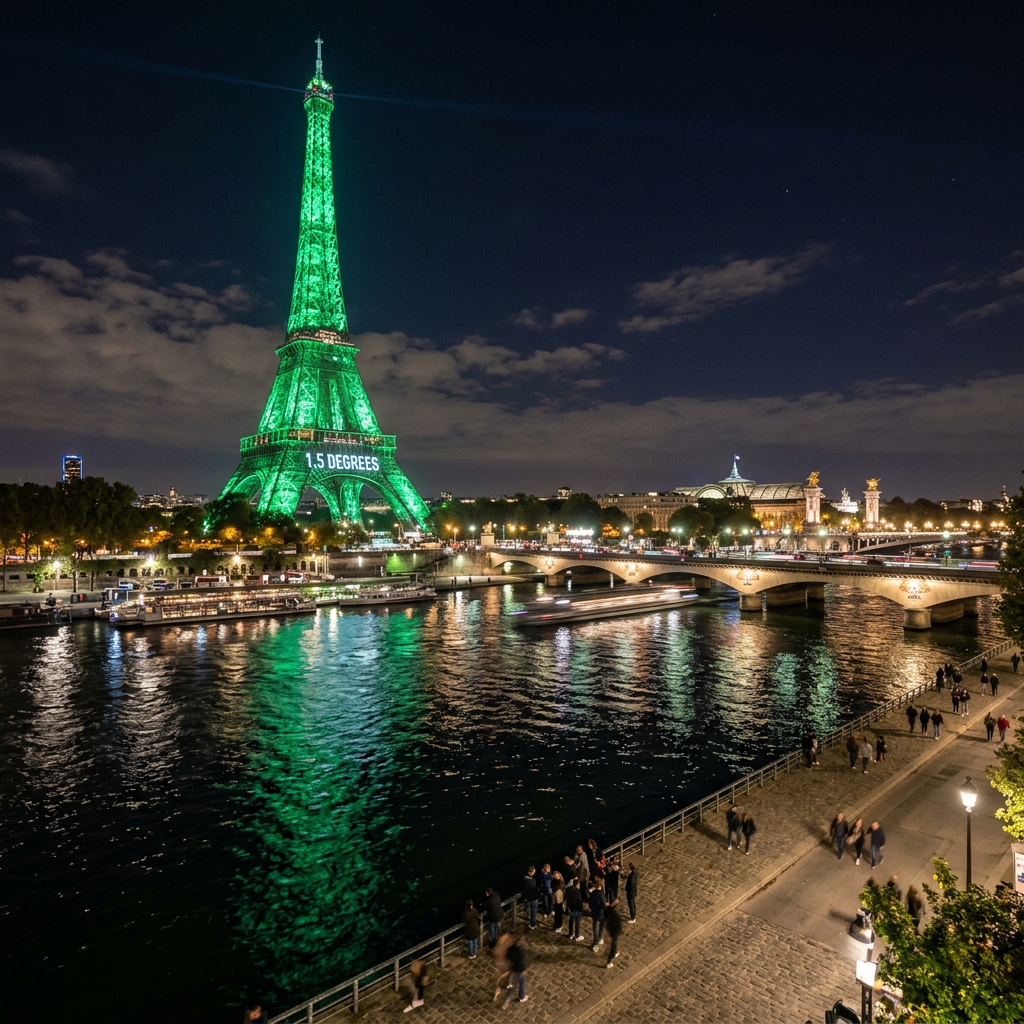
A Fragile Promise to the Earth
I remember sitting in my small apartment, watching the flickering live stream from Le Bourget as the gavel finally came down. For years, the conversation around our warming planet had felt like a shouting match in a crowded room where no one was actually listening. But that night, as the Paris Agreement was adopted, there was a strange, heavy silence of relief. It felt as though, for the first time in my life, the adults in the room had finally decided to stop arguing about the existence of the fire and started looking for the exits together.
There was something deeply moving about seeing nearly two hundred nations, each with their own selfish interests and economic hurdles, agree to a common path. I found myself thinking about the generations that would follow me—the nieces and nephews who hadn't even been born yet—and wondering if this moment would be the one we pointed back to as the turning point. It wasn't just about carbon credits or temperature ceilings; it was about the admission that we are all tethered to the same small, blue marble, and that its fate is inextricably linked to our own.
Of course, the skepticism followed quickly after the applause died down. I knew then, as I know now, that a signature on a piece of paper is not a solution in itself. Yet, the atmosphere of that December evening was thick with a rare commodity: collective hope. I walked outside into the cold night air and looked up at the stars, feeling for the first time that we might actually be worthy of the world we inhabit. It was a day where the impossible became a blueprint, and for a brief moment, the future looked a little less like a catastrophe and a little more like a choice.