
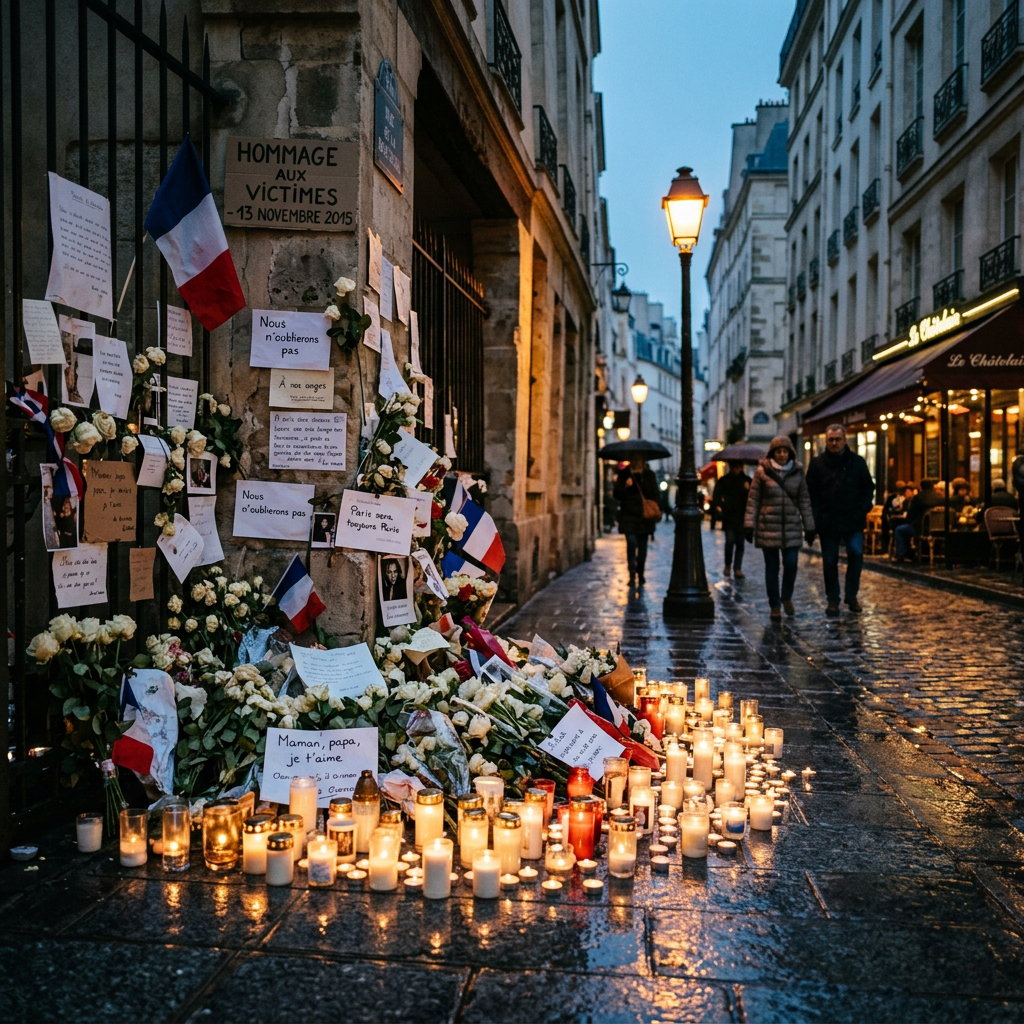
The Night the Lights Dimmed in the City of Life
I remember the frantic checking of phones, the confused texts from friends, and the cold realization that the world had changed again in a single Friday night. The attacks in Paris felt different—they weren't aimed at government buildings or military outposts, but at the very things that make life worth living: music, food, football, and friendship. It felt like an assault on the joy of being alive. Watching the scenes from the Bataclan and the cafes of the 10th arrondissement, I felt a sense of vulnerability that seemed to wrap itself around the entire globe.
In the days that followed, I was struck by the defiance of the Parisian spirit. The phrase 'Fluctuat nec mergitur'—tossed by the waves but not sunk—became a mantra for me, even thousands of miles away. I watched as landmarks from Sydney to New York were bathed in the tricolor of the French flag, a silent but luminous declaration that an attack on one city's freedom was an attack on everyone's. It was a somber time, filled with difficult questions about security and freedom, but the response was one of radical solidarity.
What stayed with me most was the image of people returning to those same cafes just days later, refusing to let fear dictate the geometry of their lives. It taught me that resilience isn't just about grand gestures; it's about the quiet courage of sitting in the sun with a coffee and a friend, even when the world feels dark. That year, Paris reminded us that while hate is loud and destructive, the collective will to preserve our way of life is a much deeper, more persistent hum.