
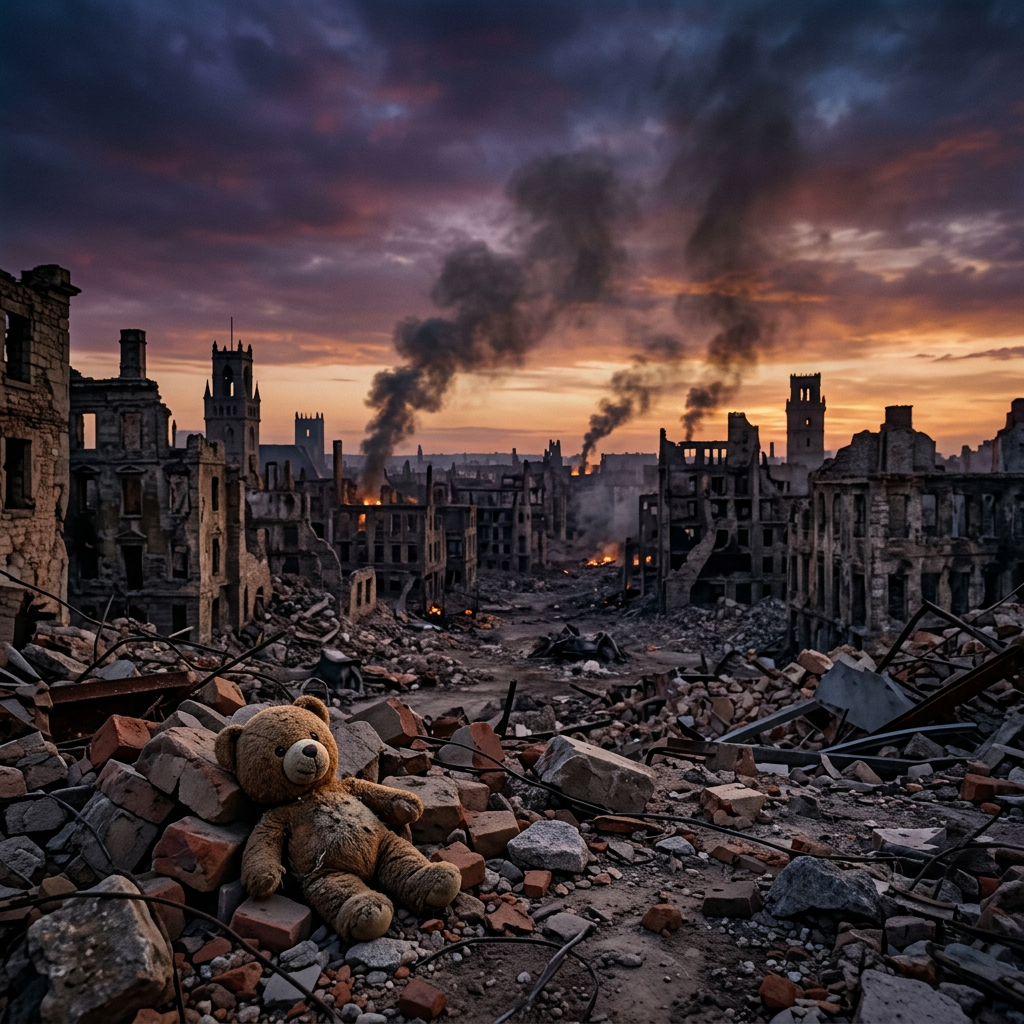
Shadows Over Aleppo: The Cost of Our Collective Silence
As the year drew to a close, my social media feed was haunted by the final goodbyes of people trapped in Aleppo. Watching those graining, handheld videos of doctors and activists saying their last words while the city crumbled around them was a harrowing experience that broke the heart of the world. It was the moment the Syrian Civil War stopped being a distant geopolitical conflict and became a deeply personal tragedy that we were all forced to witness in real-time, yet were powerless to stop.
I remember the guilt of my own safety, sitting in a warm room while a historic cradle of civilization was reduced to gray dust and broken concrete. The images of children pulled from the rubble, their faces masked in white dust and shock, became the indelible icons of 2016. It felt like a failure of our global humanity, a realization that the 'never again' promises of the past were being ignored in favor of political stalemate. The fall of Aleppo wasn't just a military victory; it was a scar on the conscience of the century.
In the quiet of the winter nights, I thought about the families fleeing across borders, carrying their lives in plastic bags. Their stories forced me to look beyond my own borders and confront the brutal reality of what happens when the world looks away. Aleppo became a symbol of everything we had lost that year—not just a city, but a sense of shared responsibility for one another. It was a somber reminder that while we were busy debating our own internal politics, others were fighting simply for the right to exist until morning.